WordPress vs. Shopify: Which Ecommerce Platform Is Best for Your Online Store in 2026?
Introduction
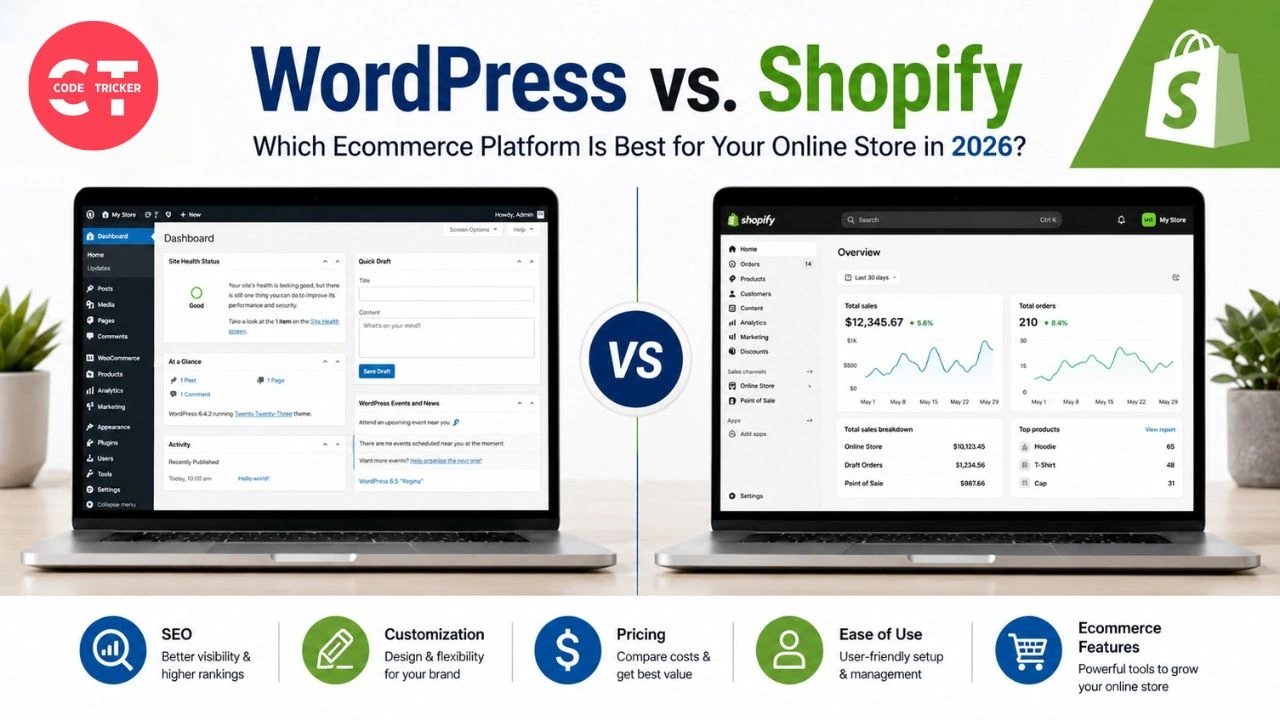
WordPress vs. Shopify is one of the most important comparisons for businesses planning to launch an online store in 2026. Both platforms offer powerful ecommerce capabilities, but they differ significantly in terms of customization, pricing, SEO, and ease of use. Many businesses looking for Ecommerce Website Development in Brampton compare these platforms before deciding which solution best fits their needs.
Choosing the right ecommerce platform can directly impact your website’s performance, user experience, and long-term growth. Understanding the differences between WordPress and Shopify will help you make an informed decision for your online business.
WordPress vs. Shopify: Understanding the Basics
When discussing WordPress vs. Shopify, it’s important to understand how these platforms operate. WordPress is an open-source content management system that becomes an ecommerce platform through WooCommerce, while Shopify is a fully hosted ecommerce solution designed specifically for online selling.
WordPress offers complete control over your website and allows extensive customization. Shopify simplifies the process by providing hosting, security, and ecommerce tools in one package.
WordPress vs. Shopify: Ease of Use Comparison
One of the biggest differences in the WordPress vs. Shopify comparison is ease of use. Shopify is designed for beginners and allows users to set up an online store quickly without technical knowledge.
WordPress requires more involvement because users need to manage hosting, plugins, updates, and security. However, the extra effort provides greater flexibility and customization opportunities for businesses with specific requirements.
Shopify Advantages
- Simple setup process
- User-friendly dashboard
- Built-in hosting and security
- Automatic updates
- Dedicated customer support
WordPress Advantages
- Greater website control
- Unlimited customization options
- Extensive plugin ecosystem
- Flexible functionality
- Strong content management capabilities
WordPress vs. Shopify: Design and Customization
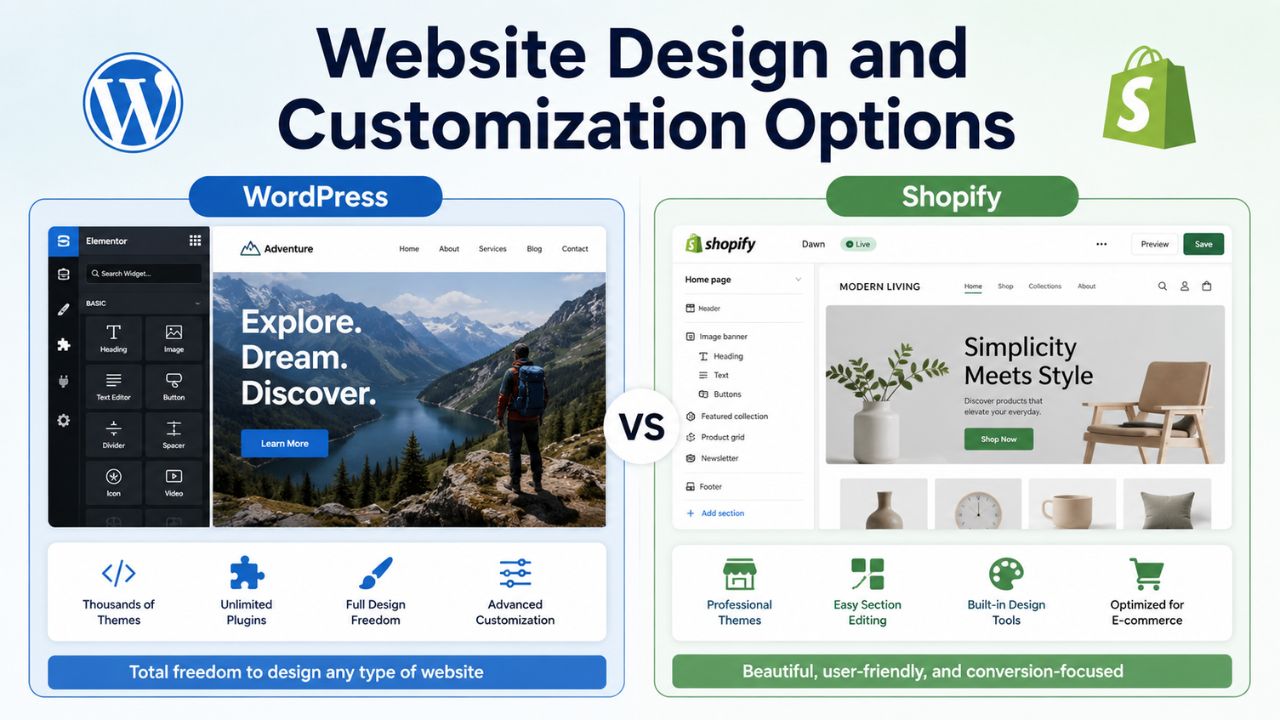
The WordPress vs. Shopify debate often highlights customization. WordPress offers thousands of themes and plugins that allow businesses to create unique ecommerce experiences tailored to their brand.
Shopify provides professional themes and customization features as well, but advanced modifications may require additional apps or development support. Businesses seeking highly customized websites often prefer WordPress because of its flexibility.
For companies that want complete creative freedom, WordPress remains one of the strongest ecommerce website solutions available today.
WordPress vs. Shopify: Ecommerce Features
Another important aspect of WordPress vs. Shopify is ecommerce functionality. Shopify includes many essential features out of the box, including inventory management, payment processing, shipping integrations, and abandoned cart recovery.
WordPress relies on WooCommerce and supporting plugins to deliver similar functionality. While this setup requires additional configuration, it provides greater flexibility for businesses with unique ecommerce requirements.
Both platforms support product management, secure payments, customer accounts, and mobile-friendly shopping experiences.
WordPress vs. Shopify: SEO Performance
SEO plays a crucial role in ecommerce success, making SEO performance a key factor in the WordPress vs. Shopify comparison. WordPress is widely known for its advanced SEO capabilities thanks to plugins such as Yoast SEO and Rank Math.
Businesses can optimize URLs, metadata, schema markup, content structure, and technical SEO settings with greater control. Many companies invest in SEO Services in Brampton to maximize these advantages and improve search engine visibility.
Shopify also offers solid SEO features, but WordPress typically provides more flexibility for businesses focused on long-term organic growth.
WordPress vs. Shopify: Pricing Comparison
Pricing is another important consideration when evaluating WordPress vs. Shopify. Shopify follows a subscription-based model that includes hosting, security, and support, making costs predictable.
WordPress itself is free, but expenses can include hosting, premium themes, plugins, maintenance, and development services. Depending on your business requirements, either platform may offer better value.
Before making a decision, businesses should consider both initial setup costs and ongoing operational expenses.
Scalability and Business Growth
As your online store grows, scalability becomes increasingly important. Shopify automatically handles traffic spikes, security updates, and hosting performance, making it an attractive option for growing ecommerce brands.
WordPress can also scale successfully when paired with quality hosting and proper optimization. Businesses that anticipate complex growth requirements often appreciate the flexibility WordPress provides.
The right choice depends on your growth strategy, technical resources, and customization needs.
WordPress vs. Shopify: Which Platform Should You Choose?
When evaluating WordPress vs. Shopify, the best choice depends on your specific business goals.
Choose Shopify if:
- You want an all-in-one ecommerce solution.
- You prefer minimal technical management.
- You need a quick and simple launch process.
- You value built-in support and maintenance.
Choose WordPress if:
- You need advanced customization.
- SEO is a major priority.
- You want complete website ownership.
- You plan to build a content-driven ecommerce strategy.
Both platforms are capable of supporting successful ecommerce businesses, but the ideal option depends on your requirements.
Conclusion
The WordPress vs. Shopify comparison shows that both platforms offer excellent ecommerce capabilities in 2026. Shopify provides simplicity, convenience, and built-in ecommerce tools, while WordPress delivers unmatched flexibility, customization, and SEO control.
Whether you’re a startup or an established business, selecting the right platform is essential for long-term success. If you’re looking for professional guidance, our team specializes in Shopify Development Services in Brampton and WordPress Website Development Canada, helping businesses build scalable online stores that drive traffic, improve conversions, and support sustainable growth.
Canada:-  +1 (647) 505-7932 |
  Email: [email protected]



 +91 8000001793