How Social Media Marketing Drives Business Growth
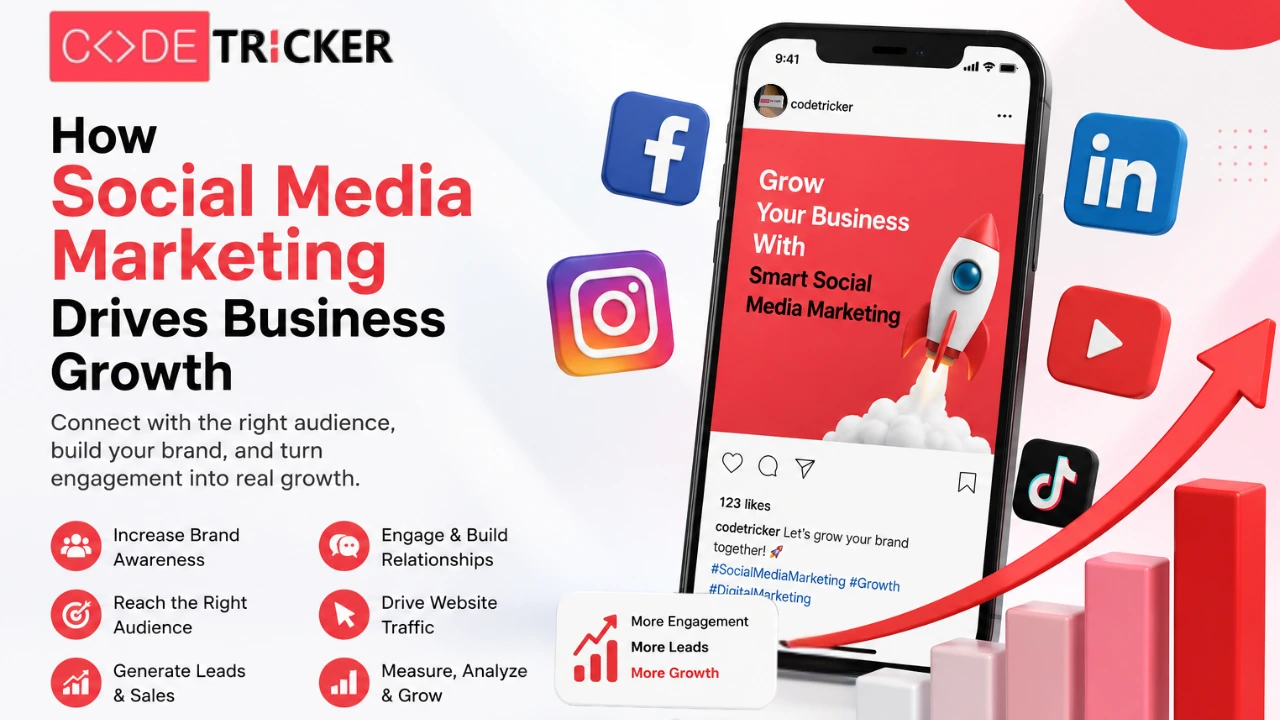
Social media has become an important part of how businesses connect with customers, build their brands, and generate sales. From small local businesses to growing e-commerce brands, the right social media marketing strategy can help businesses reach new audiences and stay connected with existing customers.
What Is Social Media Marketing?
Social media marketing is the use of platforms such as Instagram, Facebook, LinkedIn, YouTube, and other social networks to promote a business, engage with customers, and achieve marketing goals.
It can include:
- Social media content creation
- Brand promotion
- Community engagement
- Paid social media advertising
- Influencer marketing
- Video and reel marketing
- Social media management
- Performance tracking and analytics
The goal is not simply to gain followers. A successful strategy connects social media activity with measurable business results.
1. Increases Brand Awareness
Social media gives businesses an opportunity to introduce their brand to a much larger audience.
Consistent posts, videos, stories, reels and educational content can help people recognize and remember your brand. When customers repeatedly see useful and relevant content, your business can become more familiar and recognizable.
For small businesses competing with larger brands, this visibility can be particularly valuable.
2. Helps Reach the Right Audience
One of the biggest advantages of social media marketing is audience targeting.
Businesses can create content based on factors such as:
- Location
- Interests
- Age groups
- Online behavior
- Industry
- Customer needs
For example, a local business in Windsor can create content specifically for customers in the surrounding area, while an e-commerce business can target customers across Canada, India, or the USA.
3. Builds Customer Relationships
Social media is more than a promotional channel. It gives businesses a way to communicate directly with their audience.
Comments, direct messages, polls, stories, and interactive posts can create two-way communication between a brand and its customers.
Responding to questions and engaging with followers can make a business feel more accessible and customer-focused.
4. Generates Website Traffic
Social media can also become a valuable source of website traffic.
Businesses can share:
- Blog articles
- Product pages
- Service pages
- Landing pages
- Special offers
- Case studies
- Educational resources
A strong call to action can encourage users to visit the website and take the next step.
5. Supports Lead Generation
Social media marketing can help businesses generate potential customers.
For service-based businesses, social media can introduce users to your expertise and encourage them to request a consultation or contact your team.
For e-commerce businesses, product-focused content, social ads, and promotions can encourage customers to explore products and make purchases.
6. Helps Build Brand Trust
People often want to know more about a business before making a purchasing decision.
An active social media presence can show potential customers that your business is established and engaged with its audience.
Sharing:
- Customer testimonials
- Behind-the-scenes content
- Company updates
- Educational posts
- Product demonstrations
- Client success stories
can help create greater confidence in your brand.
7. Gives Businesses Valuable Customer Insights
Social media analytics can reveal what your audience likes and responds to.
Businesses can monitor metrics such as:
- Engagement
- Reach
- Website clicks
- Video views
- Follower growth
- Leads
- Conversions
This information can help businesses understand which content performs well and improve future campaigns.
8. Provides a Competitive Advantage
If your competitors are actively communicating with customers on social media while your business is not, they may have an advantage in visibility and engagement.
A consistent and well-planned social media strategy allows businesses to showcase what makes them different and stay relevant in their industry.
9. Works With Other Digital Marketing Strategies
Social media marketing works best when it is part of a broader digital marketing strategy.
For example:
SEO → Website → Social Media → Content → Leads → Customers
A blog post can attract organic search traffic, then be repurposed into social media posts, reels, or LinkedIn content. This allows businesses to get more value from the content they create.
How to Create an Effective Social Media Strategy
A successful strategy starts with clear goals.
Step 1: Define Your Goals
Decide what you want social media to achieve.
Your goals might include:
- Increasing brand awareness
- Generating leads
- Increasing website traffic
- Growing sales
- Building an online community
Step 2: Understand Your Audience
Identify who your ideal customers are and what type of content they find useful.
Step 3: Choose the Right Platforms
You don’t need to be active on every social network. Focus on platforms where your target customers are most likely to spend their time.
Step 4: Create Valuable Content
Mix promotional content with educational, entertaining, and informative posts.
Step 5: Track Performance
Review your analytics regularly and identify which content generates the strongest engagement and business results.
Final Thoughts
Social media marketing can help businesses increase brand awareness, connect with customers, generate leads, drive website traffic, and support long-term growth.
However, simply posting occasionally is not enough. Businesses need a clear strategy, consistent content, audience understanding, and regular performance analysis.
For businesses looking to strengthen their online presence, Codetricker Digital Agency can help create and manage a social media marketing strategy focused on meaningful engagement and business growth.
Canada:-  +1 (647) 505-7932 |
  Email: [email protected]




 +91 8000001793